Monday, 13 June 2011

Tuesday, 7 June 2011
Article 17: Jutsu or Do?
I was going to post a blog about koshi waza, but as I so bitterly disappointed with my performance that I'll try to produce some videos worth sharing and discuss them next week.
Something that has been knocking around in my head recently has been more philosophical. Jutsu or Do? Other than the stylised distinctions between Jutsu and Do combative systems, I think the truth is that two are not so easily parted.

To quickly address the point about Aikijutsu/Aikijujutsu and Aikido. From what I can gather only Daito Ryu was occasionally referred to a aikijutsu/aikijujutsu rather jujutsu and it seems to me like it was some sort of marketing ploy. No other school (ryu) of classical melee combative system was referred to with the suffix. Sometimes I think that this aikijutsu name gives Aikidoka a false sense of the sophistication and power of our art. The reality is that many amazing melee systems existed, like all the systems Sokaku Takeda studied and others like Kito Ryu, Yagyu Shingan Ryu (pictured) and Yoshin Ryu all carried the suffix Jujutsu.
After that small digression, when we look at the definitions jutsu means technique. Many modern creators of Japanese combative systems wanted to distance themselves with the cruel techniques of the Japanese warriors commonly called Samurai. However, does this mean we should practice blindly and without focus on the original purpose of the techniques that we are learning.
 I've covered in previous articles my belief that Aikido techniques are like living archaeology, and with focused study we can see how the techniques we practice have medieval roots. If we distance ourselves from these truths do we do ourselves a disservice? Arguably Ueshiba Sensei, especially in his later years rarely discussed (from what I've read) the combative nature/hertiage of Aikido. But is it because he knew those foundations the he could become to powerful. I believe so.
Ueshiba Sensei's understanding of Jutsu, not just the Do (or self perfection/which he focused on later) allowed him to access the true power of each and every technique he developed.
However, in our modern society can we allow ourselves to just focus on Jutsu? Is Aikido just an archaic combative system from a medieval age which has no bearing place in the 21st century? We all have the luxury of perfecting our throws and pins, our body movement and balance, a luxury rarely afforded in more unstable times. But I do believe that if we follow the Do path, then we must understand the movements we make or we are on a path to nowhere. Jutsu is the car and Do is the road, and if we want to make this journey then we need both.
Train with form.
Osu.
Something that has been knocking around in my head recently has been more philosophical. Jutsu or Do? Other than the stylised distinctions between Jutsu and Do combative systems, I think the truth is that two are not so easily parted.
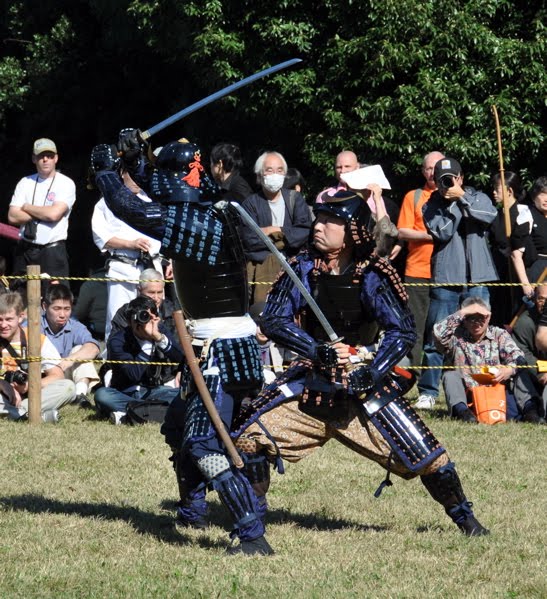
To quickly address the point about Aikijutsu/Aikijujutsu and Aikido. From what I can gather only Daito Ryu was occasionally referred to a aikijutsu/aikijujutsu rather jujutsu and it seems to me like it was some sort of marketing ploy. No other school (ryu) of classical melee combative system was referred to with the suffix. Sometimes I think that this aikijutsu name gives Aikidoka a false sense of the sophistication and power of our art. The reality is that many amazing melee systems existed, like all the systems Sokaku Takeda studied and others like Kito Ryu, Yagyu Shingan Ryu (pictured) and Yoshin Ryu all carried the suffix Jujutsu.
After that small digression, when we look at the definitions jutsu means technique. Many modern creators of Japanese combative systems wanted to distance themselves with the cruel techniques of the Japanese warriors commonly called Samurai. However, does this mean we should practice blindly and without focus on the original purpose of the techniques that we are learning.
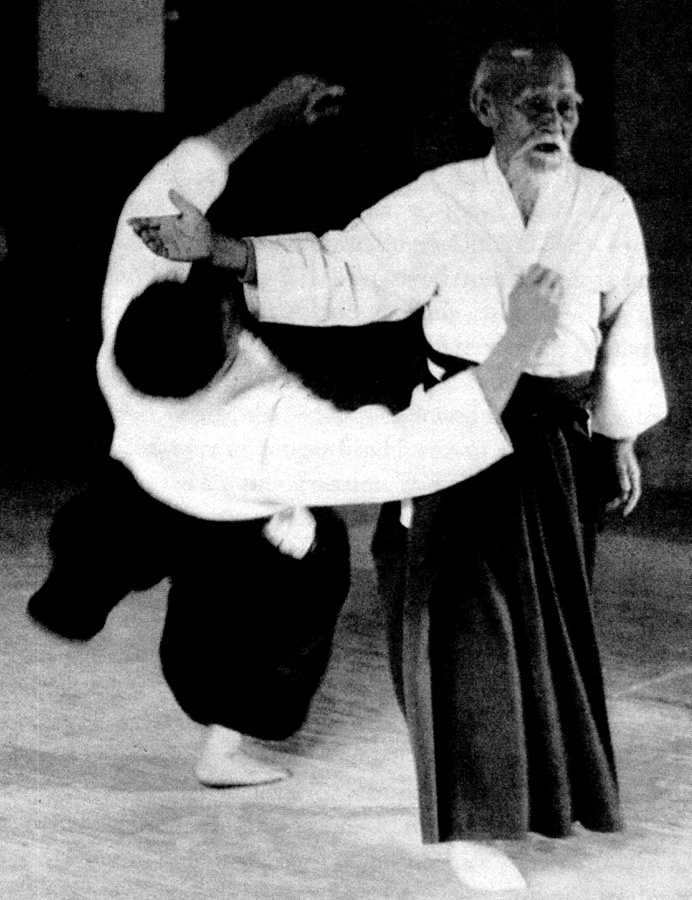 I've covered in previous articles my belief that Aikido techniques are like living archaeology, and with focused study we can see how the techniques we practice have medieval roots. If we distance ourselves from these truths do we do ourselves a disservice? Arguably Ueshiba Sensei, especially in his later years rarely discussed (from what I've read) the combative nature/hertiage of Aikido. But is it because he knew those foundations the he could become to powerful. I believe so.
Ueshiba Sensei's understanding of Jutsu, not just the Do (or self perfection/which he focused on later) allowed him to access the true power of each and every technique he developed.
However, in our modern society can we allow ourselves to just focus on Jutsu? Is Aikido just an archaic combative system from a medieval age which has no bearing place in the 21st century? We all have the luxury of perfecting our throws and pins, our body movement and balance, a luxury rarely afforded in more unstable times. But I do believe that if we follow the Do path, then we must understand the movements we make or we are on a path to nowhere. Jutsu is the car and Do is the road, and if we want to make this journey then we need both.
Train with form.
Osu.
Sunday, 22 May 2011
Article 16: Why is moving my feet so hard?
With the counter on my blog continually ticking downwards I wanted to think about a few bits I could remedy in time for the Gasshuku in October.
Although my last article was rather short, and initially out of guilt that I hadn't written a blog in a while, the point I was trying to make is clearly something that I have a problem with in my form.
So, let us begin with Shomen Uchi Shiho Nage Ichi.
With this technique being so fundamental and should, if the miss fortune to occur, be any good Aikidoka's desert island technique, I wanted to get it right.
So I've started studying my foot form. I have spoken with Mustard Sensei about this, and he has given me some of the root causes of my problems which I will discuss now.
I have, what I am now going to refer to a tippy tappy feet. This is especially apparent in this technique when I move off the line to pass by uke in the transitional movement before I shift and irimi for the throw itself. Other than simply saying that it's because I've lost balance, you can clearly see that:
Although my last article was rather short, and initially out of guilt that I hadn't written a blog in a while, the point I was trying to make is clearly something that I have a problem with in my form.
So, let us begin with Shomen Uchi Shiho Nage Ichi.
With this technique being so fundamental and should, if the miss fortune to occur, be any good Aikidoka's desert island technique, I wanted to get it right.
So I've started studying my foot form. I have spoken with Mustard Sensei about this, and he has given me some of the root causes of my problems which I will discuss now.
I have, what I am now going to refer to a tippy tappy feet. This is especially apparent in this technique when I move off the line to pass by uke in the transitional movement before I shift and irimi for the throw itself. Other than simply saying that it's because I've lost balance, you can clearly see that:
- I commit the terrible sin of not having my rear foot totally planted on the mat, this means that the power is on the inside of my legs which lessens the impact on uke and also reduces my ability to move quickly.
- Although I am really glad that I'm moving wider and lower now, I slide forwards with the lead leg and then due to my lack of balance move my rear leg back slightly, which means I'm not moving with Jushinmae.
- I'm letting uke bully my off the line slightly, and in this instance a bit of Fudoshin wouldn't go amiss.
That being said, I realise that the way I manufacture the throw itself is different from the Yoshinkan Kihon Waza, I'm really happy with how I make the final movement. Except, that I pop my hips up slightly which I shouldn't do and right at the end of the video you see me lower them again.
Shomen Ichi Ikkajo Osae Ichi
You can learn so much from getting techniques wrong (which is fairly lucky for me), so I wanted to look at this blooper first. As I shift in the after the first irimi movement, I obviously lose some structural movement ability and crash out of the technique. Simply, my foot glues itself to the mat. Mustard Sensei commented on the importance of a relaxed knee on the lead leg, which is going to be my focus from when I get back from half term until my wedding. I realise this is very specific, but I figure that with a concentrated effort on this technical element and keeping my rear foot flat on the mat I should be able to make some big gains before October.
So, I went at the technique again trying to make sure that my foot didn't stick. I am really happy that I am drawing in the rear leg in the moment just before the actual Osae Waza, meaning that all my weight bares down on ukes shoulder making a difficult technique a lot more combatively effective. My uke tests the pin and Saunders Sensei's advice about that seems to be working really well, I totally get the strength that can be found from the lower back and the feeling of having a poo. If I am perfectly honest I still worry about this technique on the day, and that this one more than any other needs to be spot on!
Like mentioned in my Ikkajo article and must not move my arms back in and just like Benge Sensei says the movement must be like a shopping trolley.
Kote Gaeshi
The only reason I filmed this technique is because I feel it is the one I am best at. I wanted to make sure that what I did have confidence in was actually good. On reflection I think it's ok, it suffers from many of the problems that Shiho Nage does.
In addition to those issues the ridatsu ho (breaking away) isn't great, I cleaner break of ukes grip and a deeper initial irimi. When I move about to perform the atemi I'm off posture and listing like a sinking ship to my right. Mustard Sensei mentioned a problem with the turn over, when I reviewed the video I think he might be getting at how I am not using the elbow to get uke on to his belly.
To summarise,
- I'm a little happier than I thought I'd be with this technical review
- Relax front knee
- Back foot totally depressed into the mat
Thanks all,
Train hard and with form.
Sunday, 8 May 2011
Article 15: Connection and Disconnection
This will only be a short article, but recently I was watching some DVDs of Mustard Sensei and it hit me that we always talk about how the hips should connect with the arms and hands in order to execute a well performed technique.
http://www.youtube.com/watch?v=0cmSuIxJMhs
Take for instance the selection in this short video. I think at the highest levels the upper body sits aligned on the hips, the feet move without pre-emptive twitching, or post movement recovery. This gives the upper body the freedom to move as it wants without making up for the lack of balance below the waist causing tension.
So perhaps when performing the kihon dosa rather than focusing on the body moving in unity, perhaps the focus should be twitching and recovery. Thus leading to freer movement and better technique.
Train with form and intensity.
Osu!
http://www.youtube.com/watch?v=0cmSuIxJMhs
Take for instance the selection in this short video. I think at the highest levels the upper body sits aligned on the hips, the feet move without pre-emptive twitching, or post movement recovery. This gives the upper body the freedom to move as it wants without making up for the lack of balance below the waist causing tension.
So perhaps when performing the kihon dosa rather than focusing on the body moving in unity, perhaps the focus should be twitching and recovery. Thus leading to freer movement and better technique.
Train with form and intensity.
Osu!
Thursday, 14 April 2011
Article 14: Developing a curriculum
As the reality of my grading approaches I've started to think about what I want to form the core part of what I do during it. So I want to make sure that I cover all the key Osae and Nage waza that I have studied, not only with Mustard and Saunders Sensei, but with Benge (Phil) Sensei on a weekly basis.
Recently I have been reading about the curriculum of Tenjin Shinyo Ryu, which is one of the Jujutsu schools that Ueshiba Sensei studied. The first level of their school is a set of techniques called the tehodoki waza, which are a set of fundamental techniques. I wanted to think about what in my opinion would be the tehodoki waza of Aikido. Obviously the expectation of the quality of these techniques would be very high, especially when attempting to do my sandan.
Here is what I have so far:
*I am purposefully using the Yoshinkan nomenclature (is most cases) as this is the one I will adopt eventually. However, there is one technical different between what I will be doing and typical Yoshinkan attacks, as uke can grip the wrist/elbow/shoulder or even strike on different sides depending one whether the nage waza is ichi or ni. As far as my curriculum is concerned I'll fall more in line with attacks being on the same side regardless of irimi or tenkan, which does mean than an additional step needs to be taken on some techniques to perform an adequate irimi or tenkan movement.
Shomen Uchi (ai-hanmai R/R or L/L)
Ikkajo
Shiho nage
Katate Mochi (gyaku-hanmai R/L or L/R)
Nikkajo
Shomeni riminage
Kote gaeshi
Katate Mochi Hantai (ai-hanmai R/R or L/L)
Sankajo
Sokumen Irimi nage
Kata Mochi (gyaku-hanmai R/L or L/R)
Yonkajo
Hijishime
Ryote Mochi (ai-hanmai R/R or L/L)
Tenchi nage
So, these are the tehodoki waza which I want to form a key part of the grading. I have at this stage purposefully omitted kokyu nages, as the foundation of this technique is grounded in an understanding of those above. In addition to this I need to include some ushiro waza, ninindori, sannindori and possibly a tanto jiyu waza..... I need to speak more with those grading me to establish this.
Over the next two months I will break down each of these techniques, in an effort move on from principle to application.
Having looked at some pictures of me doing irimi nage in the past I was leaving my arm behind when sliding forward behind uke. This is something I think I have now got the better of, plus I have a much better connection with ukes sternum, so when I do slide forward there is a more certain effect on uke.
http://www.youtube.com/watch?v=NnhwhFkkK6c
Similarly I have spoken about irimitsuki before, especially as it is very valuable technique in any convincing jiyu waza. I've been working on it a little, I've purposefully turned ukes head to the side to make the ukemi easier (I think). However, I am at least a little happy with my kamae and my practice of tai no henko ichi is finally paying off.
http://www.youtube.com/watch?v=Op9YuRd_jHM
That's all for now.
Recently I have been reading about the curriculum of Tenjin Shinyo Ryu, which is one of the Jujutsu schools that Ueshiba Sensei studied. The first level of their school is a set of techniques called the tehodoki waza, which are a set of fundamental techniques. I wanted to think about what in my opinion would be the tehodoki waza of Aikido. Obviously the expectation of the quality of these techniques would be very high, especially when attempting to do my sandan.
Here is what I have so far:
*I am purposefully using the Yoshinkan nomenclature (is most cases) as this is the one I will adopt eventually. However, there is one technical different between what I will be doing and typical Yoshinkan attacks, as uke can grip the wrist/elbow/shoulder or even strike on different sides depending one whether the nage waza is ichi or ni. As far as my curriculum is concerned I'll fall more in line with attacks being on the same side regardless of irimi or tenkan, which does mean than an additional step needs to be taken on some techniques to perform an adequate irimi or tenkan movement.
Shomen Uchi (ai-hanmai R/R or L/L)
Ikkajo
Shiho nage
Katate Mochi (gyaku-hanmai R/L or L/R)
Nikkajo
Shomeni riminage
Kote gaeshi
Katate Mochi Hantai (ai-hanmai R/R or L/L)
Sankajo
Sokumen Irimi nage
Kata Mochi (gyaku-hanmai R/L or L/R)
Yonkajo
Hijishime
Ryote Mochi (ai-hanmai R/R or L/L)
Tenchi nage
So, these are the tehodoki waza which I want to form a key part of the grading. I have at this stage purposefully omitted kokyu nages, as the foundation of this technique is grounded in an understanding of those above. In addition to this I need to include some ushiro waza, ninindori, sannindori and possibly a tanto jiyu waza..... I need to speak more with those grading me to establish this.
Over the next two months I will break down each of these techniques, in an effort move on from principle to application.
Having looked at some pictures of me doing irimi nage in the past I was leaving my arm behind when sliding forward behind uke. This is something I think I have now got the better of, plus I have a much better connection with ukes sternum, so when I do slide forward there is a more certain effect on uke.
http://www.youtube.com/watch?v=NnhwhFkkK6c
Similarly I have spoken about irimitsuki before, especially as it is very valuable technique in any convincing jiyu waza. I've been working on it a little, I've purposefully turned ukes head to the side to make the ukemi easier (I think). However, I am at least a little happy with my kamae and my practice of tai no henko ichi is finally paying off.
http://www.youtube.com/watch?v=Op9YuRd_jHM
That's all for now.
Saturday, 19 March 2011
Article 13 - Core development with a twist
I've always found kote gaeshi an interesting technique. I think that's because like nikkajo, it is easy to rely not only on an over reliance on shoulder engagement, but also pain compliance. Please don't get me wrong, I think one should expect an element of discomfort and pain when training in a combative system. But the wealth of power and intensity that can be generated when looking at kote gaeshi not only as an arm lock, but also has a throwing technique that can be delivered with the whole body.
Of course a big part of my kote gaeshi journey started having received this technique (no doubt not at full bore) from Mustard Sensei. When training with some beginners the weakness in kote gaeshi can become clear, as a focus on wrenching the wrist can only yield the disappointment of the new student simply looking bemused at some mild wrist discomfort.
 So, my first analysis will start by unpicking (and destroying) my own technique.
 I'd like to start with the part easiest to pick up with a camera which is the final zanshin finish. This is very revealing, as I can clearly see how my posture lacks width and strength in the back leg.
When compared to infinitely more dedicated aikidoka like Takeno Sensei we can see how much further his weight is forward (jushinmae) and the importance of the locked back leg which results in the full engagement of the hips. Muscularly an aikidoka should rely far more on latissimus dorsi, to strengthen and lock 'down/shut' the back and retus femoris muscles in the thighs to proved the thrust or power generation.
 Whether the movement is irimi or tenkan the technique lives or dies with the core strength and balance provided by key back and leg muscles. When practising the kihon dosa, the technical focus should be on the relaxed power that can be generated from the knowing use of these two muscles. Having looked at a range of photographs of my aikido, the one above sadly being characteristic is that I roll my knee (on the back leg) inwards, making it impossible to establish anything like Takeno Sensei's technique. How can you tell you might ask? Well you can tell from how my hakama lies on my back leg. With a distinct crease at knee height which is just not present on far better postures like Mustard Sensei. I realise that I'm setting the bar high, but for me, this basic posture is FUNDAMENTAL to any real power development.
Having spent some time picking apart the final position, it could be argued that uke is well on the way to the mat by then so who cares. But that fact is that the final positioning is a definite reflection of your movement throughout the technique. So, looking at the some video footage should further confirm the issues I've discussed so far.
http://www.youtube.com/watch?v=o6RwyyBJsrE
During the first tenkan technique the timing between the rear leg and my hips is not right, so uke won't feel the full impact of the pivot. I was watching Dancing on Ice (bear with me, this is going somewhere) and I was hit with a very interesting and very transferable idea. When a male dancer was trying to left his rather under-dressed partner above his head, even though he was very muscular he struggled to do so. But, with some support from a coach he was asked to try and hold a water bottle between his legs whilst doing the lift. I guess that his gives some mental attachment to your core, and thus with this coordinated strength he was able to perform the movement.
I think this certainly applies to aikido and in particular this technique. The second attempt, I shift my front foot once I've finished pivoting, suggesting a lack of balance and width in my 80/20 posture. But sadly the final tenkan indicates a far bigger problem, that is I take my foot off the mat when I pivot which surely must mean that I cannot be generating any hip power. But the pivot completes which suggests that the power is not from the hips but from the shoulders. I want to credit Andy Watson (from the BKA) for this epiphany which is the reason why we rush techniques is either:
Of course a big part of my kote gaeshi journey started having received this technique (no doubt not at full bore) from Mustard Sensei. When training with some beginners the weakness in kote gaeshi can become clear, as a focus on wrenching the wrist can only yield the disappointment of the new student simply looking bemused at some mild wrist discomfort.

 I'd like to start with the part easiest to pick up with a camera which is the final zanshin finish. This is very revealing, as I can clearly see how my posture lacks width and strength in the back leg.
When compared to infinitely more dedicated aikidoka like Takeno Sensei we can see how much further his weight is forward (jushinmae) and the importance of the locked back leg which results in the full engagement of the hips. Muscularly an aikidoka should rely far more on latissimus dorsi, to strengthen and lock 'down/shut' the back and retus femoris muscles in the thighs to proved the thrust or power generation.

Having spent some time picking apart the final position, it could be argued that uke is well on the way to the mat by then so who cares. But that fact is that the final positioning is a definite reflection of your movement throughout the technique. So, looking at the some video footage should further confirm the issues I've discussed so far.
http://www.youtube.com/watch?v=o6RwyyBJsrE
During the first tenkan technique the timing between the rear leg and my hips is not right, so uke won't feel the full impact of the pivot. I was watching Dancing on Ice (bear with me, this is going somewhere) and I was hit with a very interesting and very transferable idea. When a male dancer was trying to left his rather under-dressed partner above his head, even though he was very muscular he struggled to do so. But, with some support from a coach he was asked to try and hold a water bottle between his legs whilst doing the lift. I guess that his gives some mental attachment to your core, and thus with this coordinated strength he was able to perform the movement.
I think this certainly applies to aikido and in particular this technique. The second attempt, I shift my front foot once I've finished pivoting, suggesting a lack of balance and width in my 80/20 posture. But sadly the final tenkan indicates a far bigger problem, that is I take my foot off the mat when I pivot which surely must mean that I cannot be generating any hip power. But the pivot completes which suggests that the power is not from the hips but from the shoulders. I want to credit Andy Watson (from the BKA) for this epiphany which is the reason why we rush techniques is either:
- That we have this misunderstanding that we need to move fast to be effective OR/AND
- That we lack the muscular strength to maintain the form (more appropriate for me)
So what am I going to do about it. More research about core development exercises to directly develop these core muscles, more kihon dosa in my front room and a really interesting break down of koho ukemi which I'm excited about. Watch this space.
Train hard and with form. Osu
Tuesday, 8 March 2011
Article 12: Shoshin - The Beginners Mind
It's been some time since my last post and I'm eager to reflect on my self discovery over the last few weeks.
I was lucky enough to be able to train with Sensei Saunders at his dojo in Kent a couple of weeks ago. Obviously we spent a great deal of time looking at the Kihon Dosa. It's no secret that I haven't had years of Yoshinkan Kihon Dosa experience, and spending some time focusing on them as a fundamental exercise was really beneficial.
So what's changed?
Having attended some seminars with Mustard Sensei, and obviously Saunders Sensei, kamae is central to progression. Having spent years practising with and in different styles of Aikido, Yoshinkan does seem (in my humble opinion) to spend more time focusing on shites posture (unlike other systems which may focus more time on breaking ukes posture).
Kamae and kihon dosa are inseparable, and I found this particularly interesting when looking at how the arms should move forward and back during tai no henko ichi. I would often stare at Chida Sensei doing these exercises on YouTube, and although I have no delusions of grandeur, he was clearly doing something (or not) that I was (or shouldn't). So, rather than a large circular movement, where the arm moves outside ones own body line, the lead arm stays the same height as it is in kamae.... economy of movement. This is also true for tai no henko ni.
When performing Hiri no Yosei Ichi and Ni, there should be a strong feeling of cutting. Which was interesting, as I hoped that my 4 years of iai would help with that movement, however, sadly not. This was especially apparent when I slide forward and my elbow shoot out to the side when I bring my hands up. I would typically not do this when I cut in iaido, but I seem to do it when I perform this exercise.
The second point that I got from the session, further confirmed my belief in 'form', which was reassuring. Weaknesses in your form are hard to expose at the certain level in Aikido, as uke can (and definitely shouldn't) have a pre disposed belief that they should just fall down. We spent some time looking at the uke for ikkajo ichi and ni (which I'll cover in a bit), and we did some testing. I covered this before in my ikkajo article, but when you have a strong uke then the need to show jushin mae THROUGHOUT the technique is essential to it's combative success. Strength in the form allows us to continue to focus on relaxing our arms, and interestingly enough, our knees. This is important when drawing up the rear leg either into 60/40 or 80/20. I also now understand how the direction of the technique can be established through the position of ukes shoulders and by following the direction set by the inside corner of the knee (more to follow).
Pedagogically Saunders Sensei Ghost Uke exercise was really useful. Uke should attack with all the mental and physical dynamism of a usual attack, however, they do not touch shite. This means that uke can focus on his form and more importantly where he should be during the technique. I found that I was falling behind during ikkajo ichi and falling too early, and more worryingly pulling away during ikkajo ni, which I think is far more about fear from the impending ukemi that an intentional resistance.
Training with Saunders Sensei and his students was very enlightening and humbling, not just through the exposure of my faults, but their hospitality.
I finally want to discuss an interesting epiphany I had whilst teaching children on Saturday. Mustard Sensei has this brilliant story (one of many) that he tells about his daughter training with a huge Hungarian guy at his dojo. At the heart of the message is being soft. Training with children on Saturday made me consider where the power comes from in the technique, and only by 'listening' with your body though relaxation can we really hear what we should be doing. I found that using a child as uke was really valuable and something that we should all do from time to time. Obviously not with the purpose of smashing them around, but so that we can see how power can be applied without the excessive use of shoulder power.
Train hard and with form. Osu.
Subscribe to:
Posts (Atom)